Adaptive Low-Power Sensor Node
EE 497/498 Senior Design · 2026–2027 · with Abel Zelalem & Freddy Ramirez
A battery-powered LoRa sensor node that decides when to wake up. Between readings, a power switch fully cuts the radio and sensor, and the ESP32 drops into deep sleep, so the node draws almost nothing while idle.
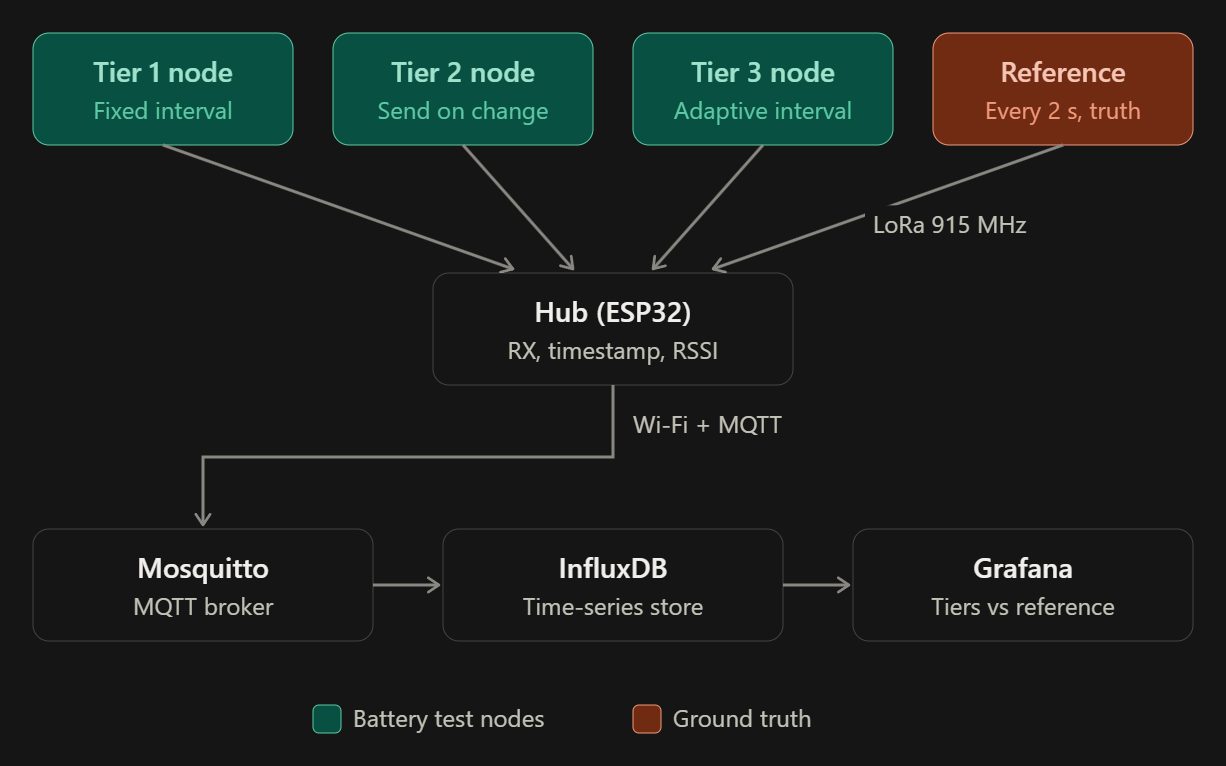
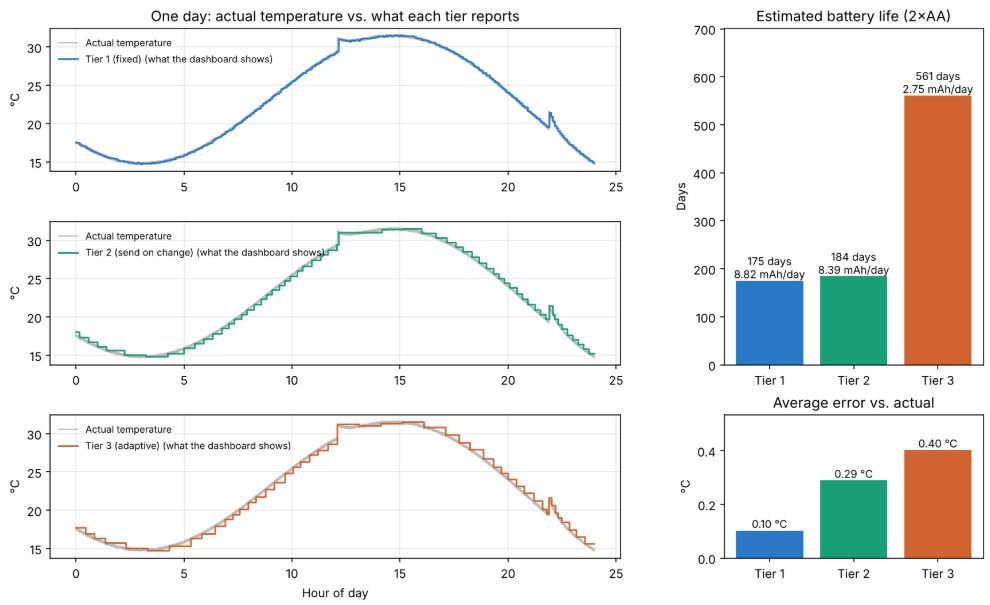
We're comparing three sampling policies on identical hardware: a fixed schedule, a threshold policy that only transmits when the reading changes, and an adaptive policy that learns when conditions shift and backs off when they're stable. Each one is measured against a reference node sampling every 2 seconds, to answer a concrete question: how much battery life does each policy save, and how much accuracy does it give up?
- Writing ESP32 firmware for all three sampling policies, with state saved across power cycles
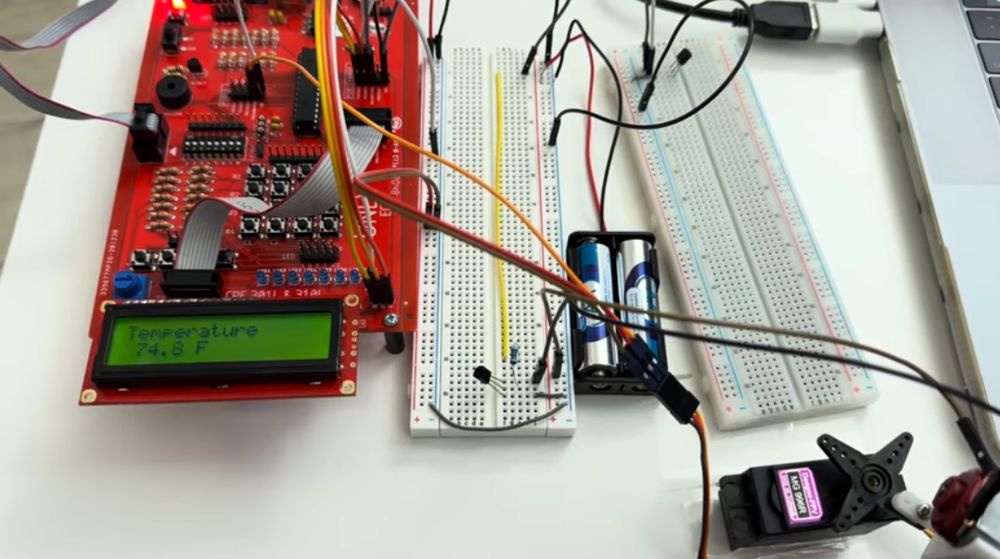
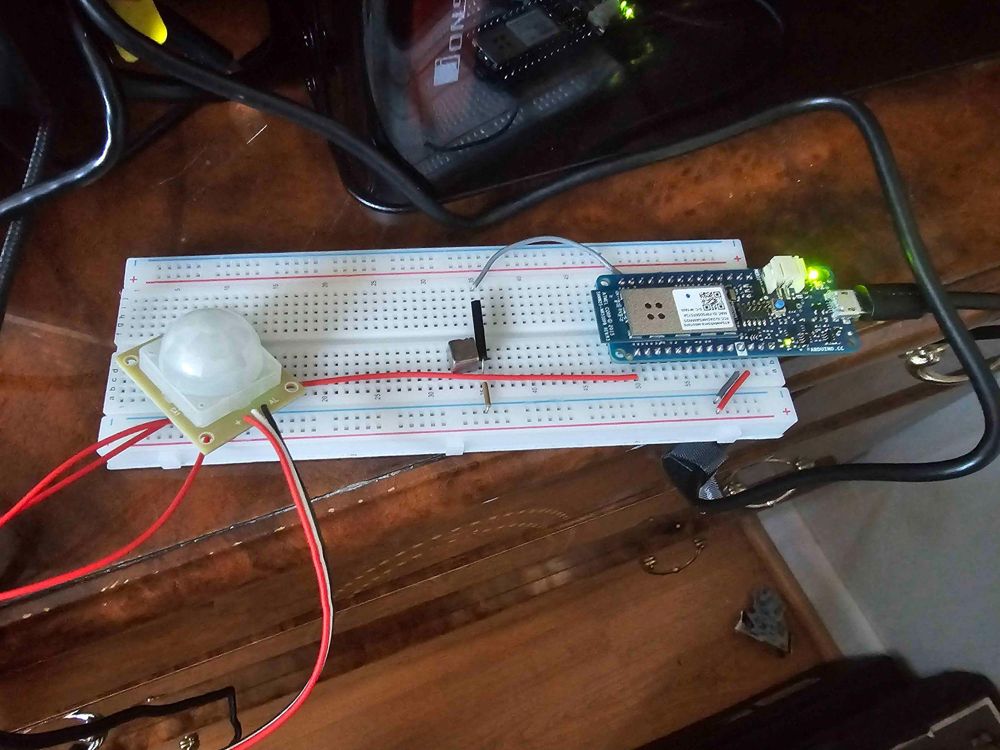
- Power-gated node: ESP32, RFM95W LoRa radio (915 MHz), DHT22 sensor, TPS259470 eFuse
- Hub forwards data over MQTT to InfluxDB and a live Grafana dashboard
- Working on a simulator to estimate energy and accuracy trade-offs before hardware testing
- Advised by Dr. Grzegorz Chmaj, UNLV